IELTS Speaking Part 3 Practice: Discussion Questions
Part 3 is where most band 6 students drift and most band 7 students separate. The questions get abstract — society, change, the future — and short personal answers stop working. You need a small structure you can lean on under pressure.


What this part of IELTS Speaking testsPart 3 lasts about 4–5 minutes. The examiner asks broader discussion questions linked to your Part 2 topic. They want extended answers with an opinion, a reason, and an example — not a list of facts.
Practical adviceA strong Part 3 answer usually gives:
- a clear opinion in the first sentence
- one reason that explains it
- one example to make it concrete
- a small contrast or 'on the other hand' when natural
Example
Weak answer
“Yes, technology is good. People use it every day and it helps them.”
Better version
“I think it has helped more than it has hurt, on balance. Take my parents — they live a four-hour flight away, and a five-minute video call most evenings means my kids actually know them. That would not have been possible twenty years ago. The downside is the attention cost, but that feels like a fixable habit, not a reason to roll it back.”
Why this is stronger
- clear opinion in the first sentence
- concrete personal example (parents, video calls)
- acknowledges the counter-argument without losing the thread
- natural connectors (on balance, take, the downside is)
Common mistakes
Short answers
Short Part 1-length answers — Part 3 needs four or five sentences
No examples
Opinions with no reason or example to back them up
Memorized phrases
Memorized 'discursive' phrases (in conclusion, to sum up) that sound rehearsed
Just listing
Listing both sides without ever picking one
Filler words
Filling silence with 'you know' or 'like' instead of pausing briefly
TalkReady material: Part 3 answer formulaQuestion: Do you think people travel more now than in the past?
1
Opinion
2
Reason
3
Example
4
Counter-point
Weak answer
“Yes, people travel more now. They have more money and there are many planes.”
Better version
“Definitely more, at least until very recently. Cheaper flights and a stronger middle class in countries like Brazil or India mean a normal family can do a beach trip abroad — something my parents could not afford at my age. That said, remote work might slow it down again, because the people who used to fly the most are now travelling for leisure instead of meetings.”
Practice libraryWarm up with one question from each group. Then practice one inside TalkReady and get a more natural version of your own answer.
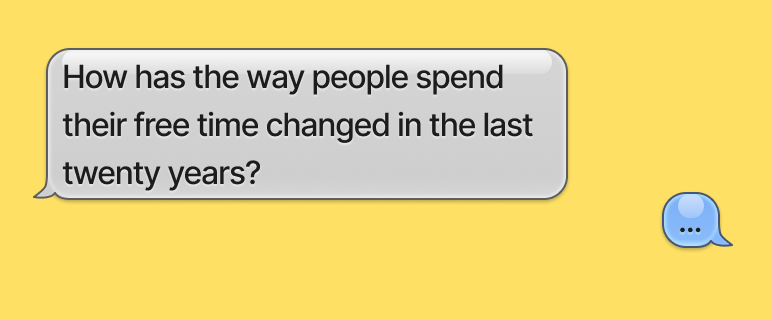


Try a real IELTS Speaking questions.
Get feedback instantlyFrequently asked questions
How long should a Part 3 answer be?
Around four or five sentences. Long enough to show an opinion, a reason and an example — short enough that the examiner can still ask follow-ups.
Is it okay to disagree with the examiner in Part 3?
Yes. Part 3 tests your ability to discuss, not your beliefs. A clear, polite disagreement with a reason often scores better than reluctant agreement.
What if I do not have an opinion on a Part 3 topic?
Pick a position you can defend for thirty seconds, even if it is not strongly yours. Examiners reward fluency and reasoning, not the 'correct' view.
How is Part 3 different from Part 1?
Part 1 is about you — short personal answers. Part 3 is abstract — society, change, the future — and needs longer extended answers with reasons and examples.